This guide has no affiliate links or sponsored selections.
A chair count is a practical constraint, not a reason to stop inviting people. Solve the seating and traffic flow before setting the table, and be honest about whether the room can hold a sit-down meal.
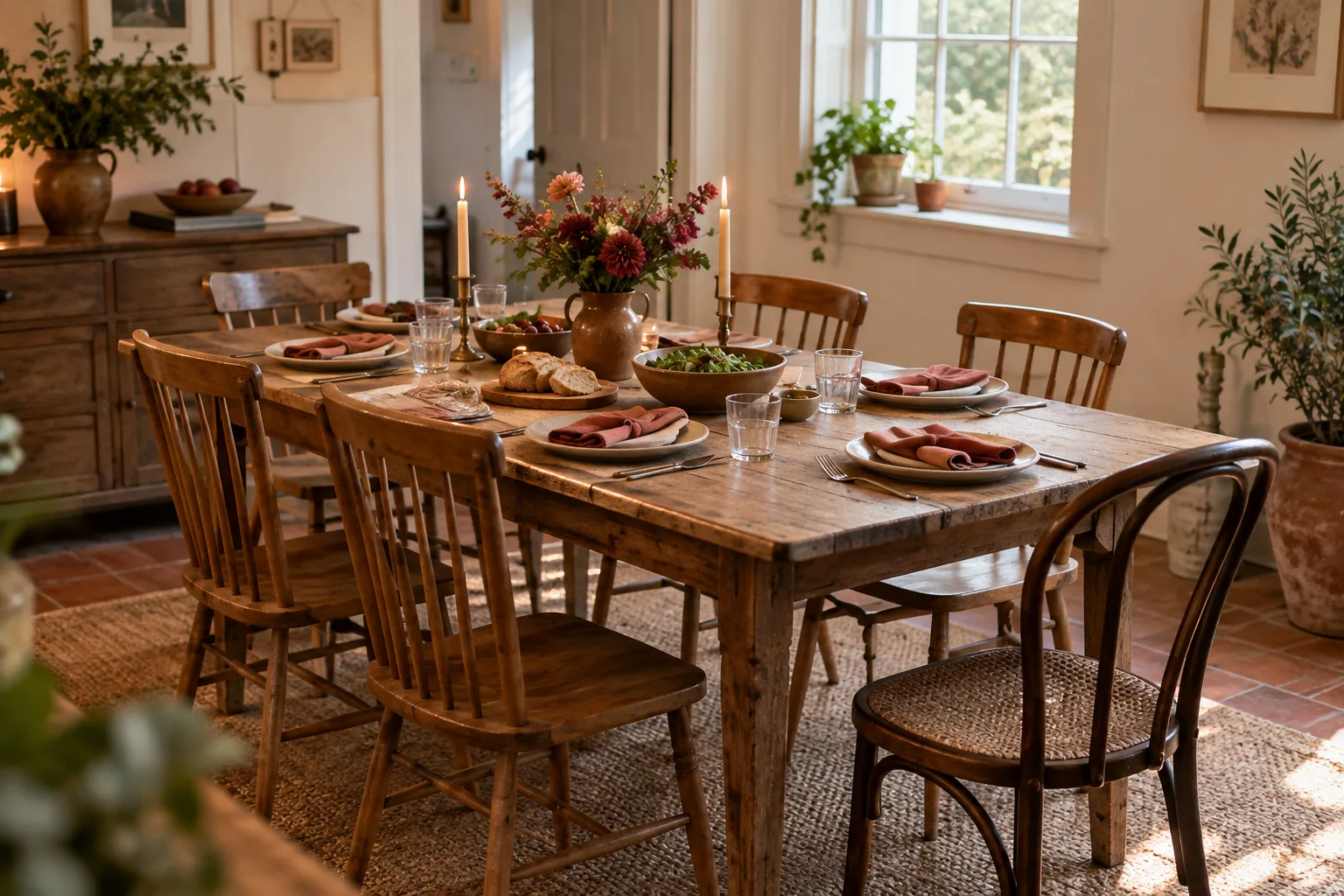
Measure the real room
Pull out each chair as if someone is seated, then walk the route to the kitchen and bathroom. A table that fits six place settings may still block the only walkway. Move a side table or serving cart out of the room before adding seats. Keep doorways and accessible routes clear.
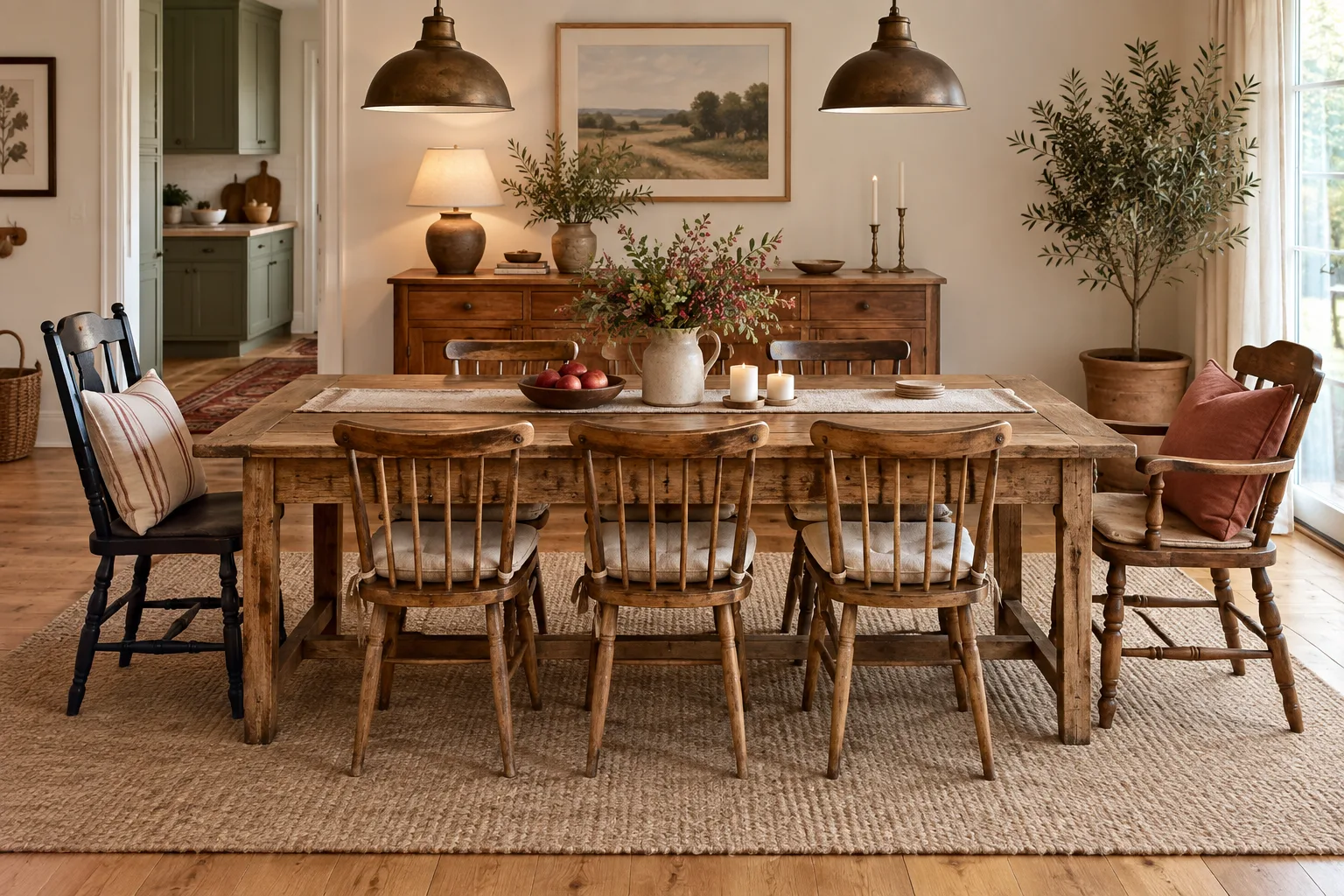
Find two safe seats
Borrow sturdy dining chairs or use two existing chairs of suitable height. Check stability, seat height and whether anyone needs back support. Avoid stools for a long meal unless guests actively prefer them. Different chair styles can be placed at the ends of the table so the mix feels deliberate.
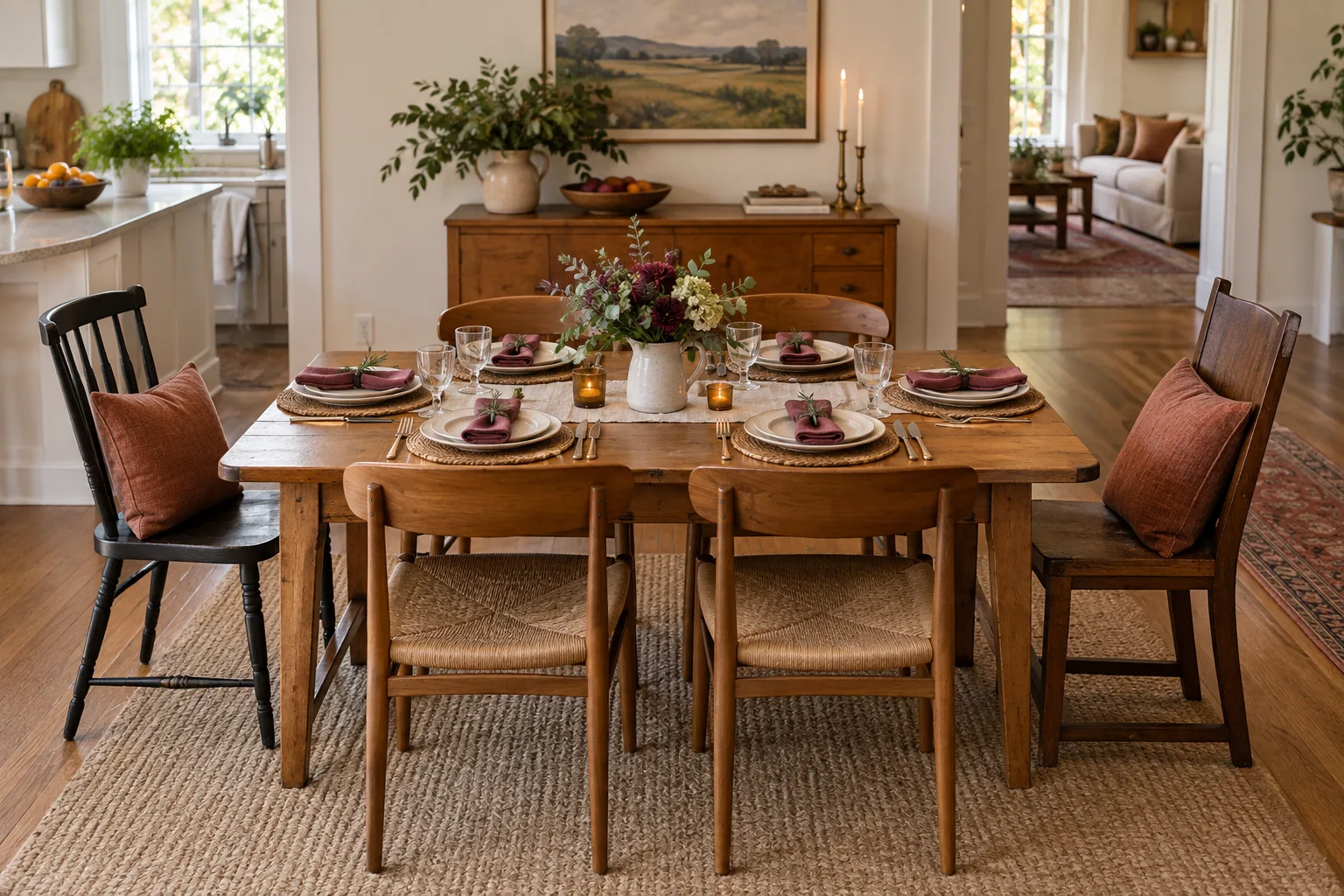
Change the format if needed
For a tight room, serve food from a counter and let guests sit in two nearby areas, or plan a shorter coffee-and-dessert visit rather than a full supper. Tell guests the format when inviting them. The goal is comfort and conversation, not proving six settings can be squeezed onto one surface.
Use what you own
Try chairs from a desk or bedroom before shopping, but only if they are stable and appropriate. A simple cloth or cushion can help a hard seat, provided it does not slide. A borrowed chair is often the best piece of hosting equipment.
Where this may not fit
A compact table is not always safe or accessible for six. Do not place guests where they cannot get up easily, and do not rely on unstable improvised seating. A smaller invitation can be the most welcoming choice.