This guide has no affiliate links or sponsored selections.
Cleanup is easier when it has a place in the plan, not when it becomes a surprise at the end. The goal is a usable kitchen tomorrow, not a perfectly empty sink tonight.
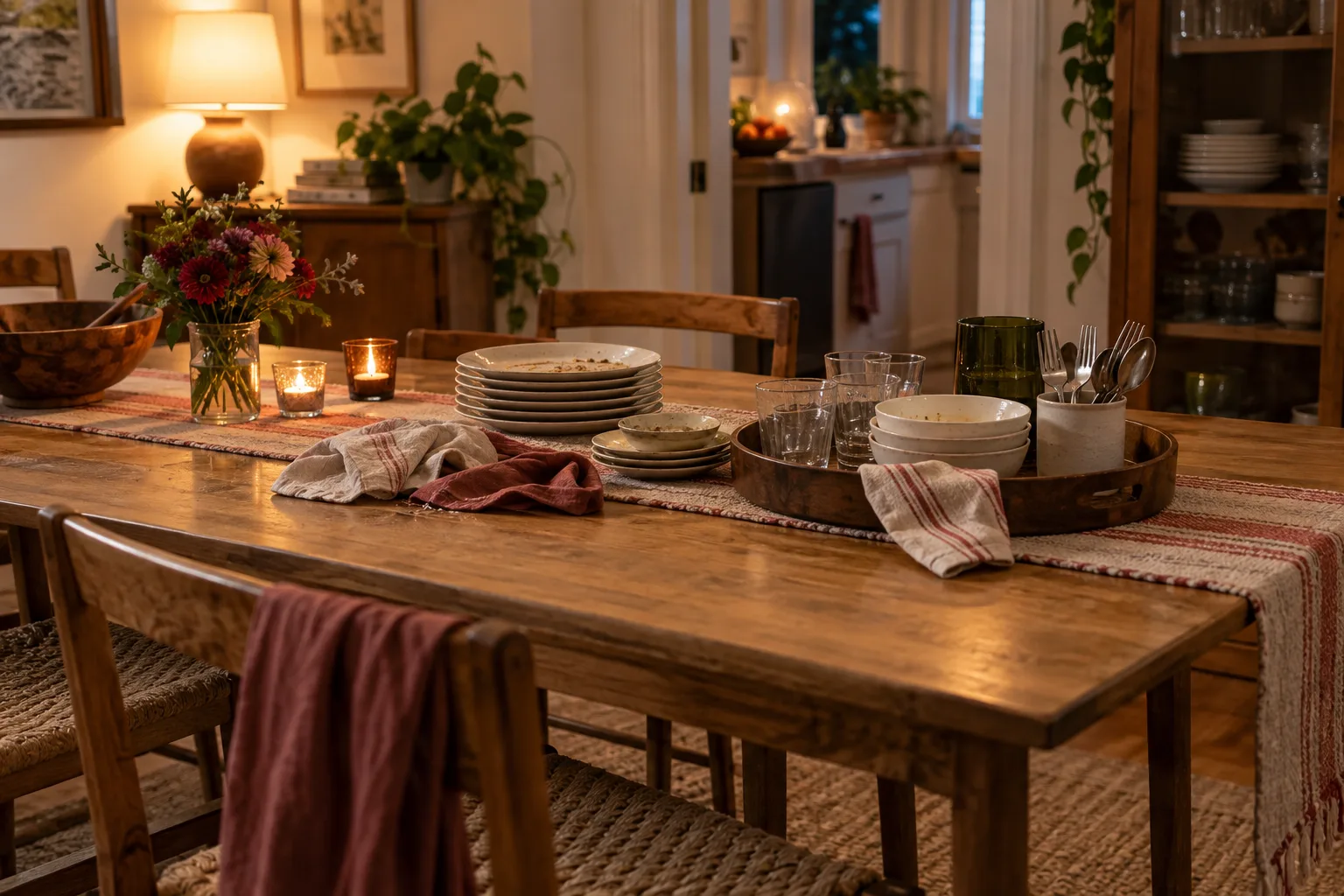
Before guests arrive
Empty the dishwasher or drying rack, line a bin, and clear one landing zone for used plates. Put food containers and a pen for labels where you can reach them. These few minutes prevent a pile of dishes from competing with hot leftovers for counter space.
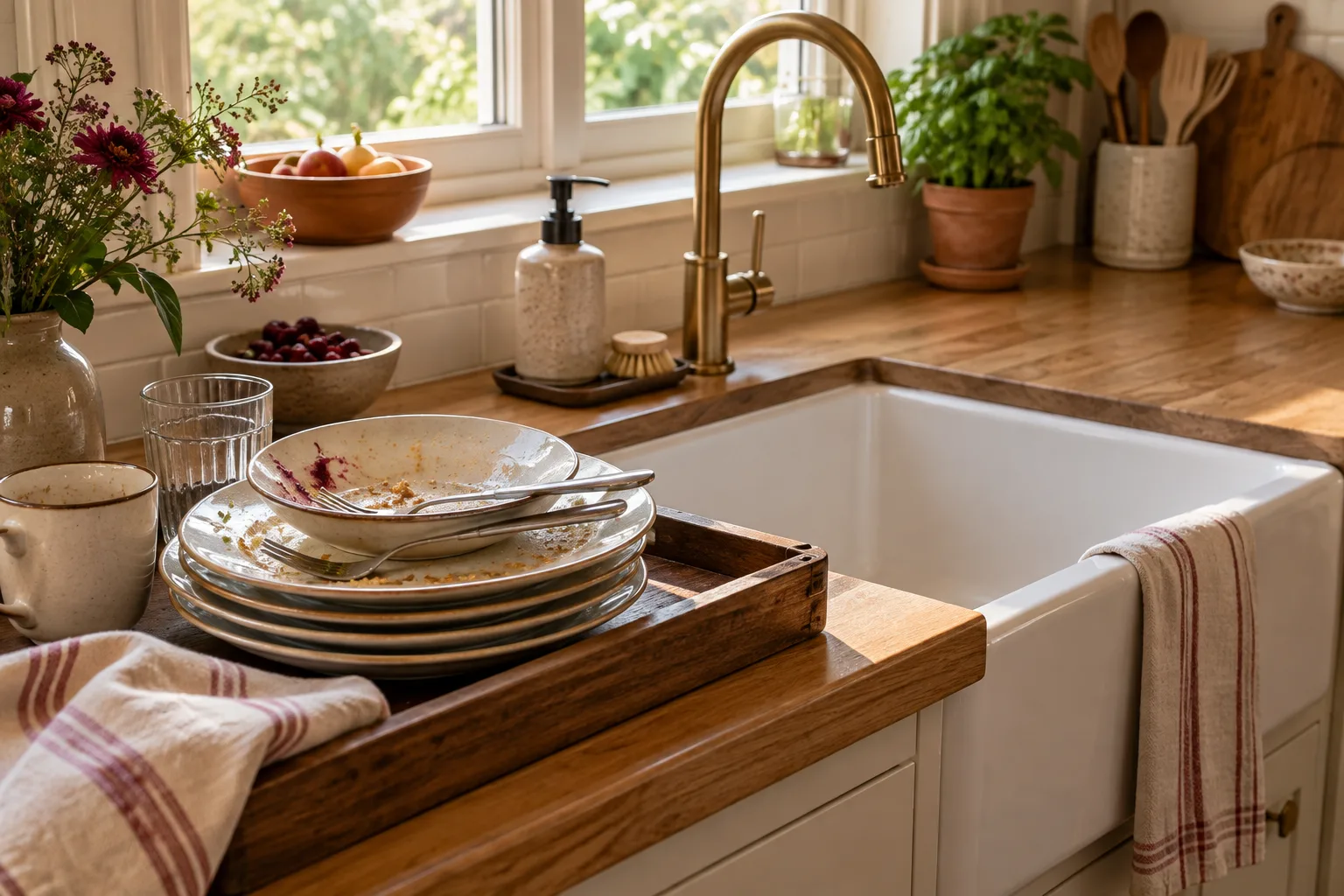
During the evening
When dinner ends, ask whether anyone wants more food before clearing. Move one tray of dishes at a time and leave dessert or tea available. If a guest offers help, give a specific low-friction task such as collecting glasses; a long chore list can make the gathering feel over.
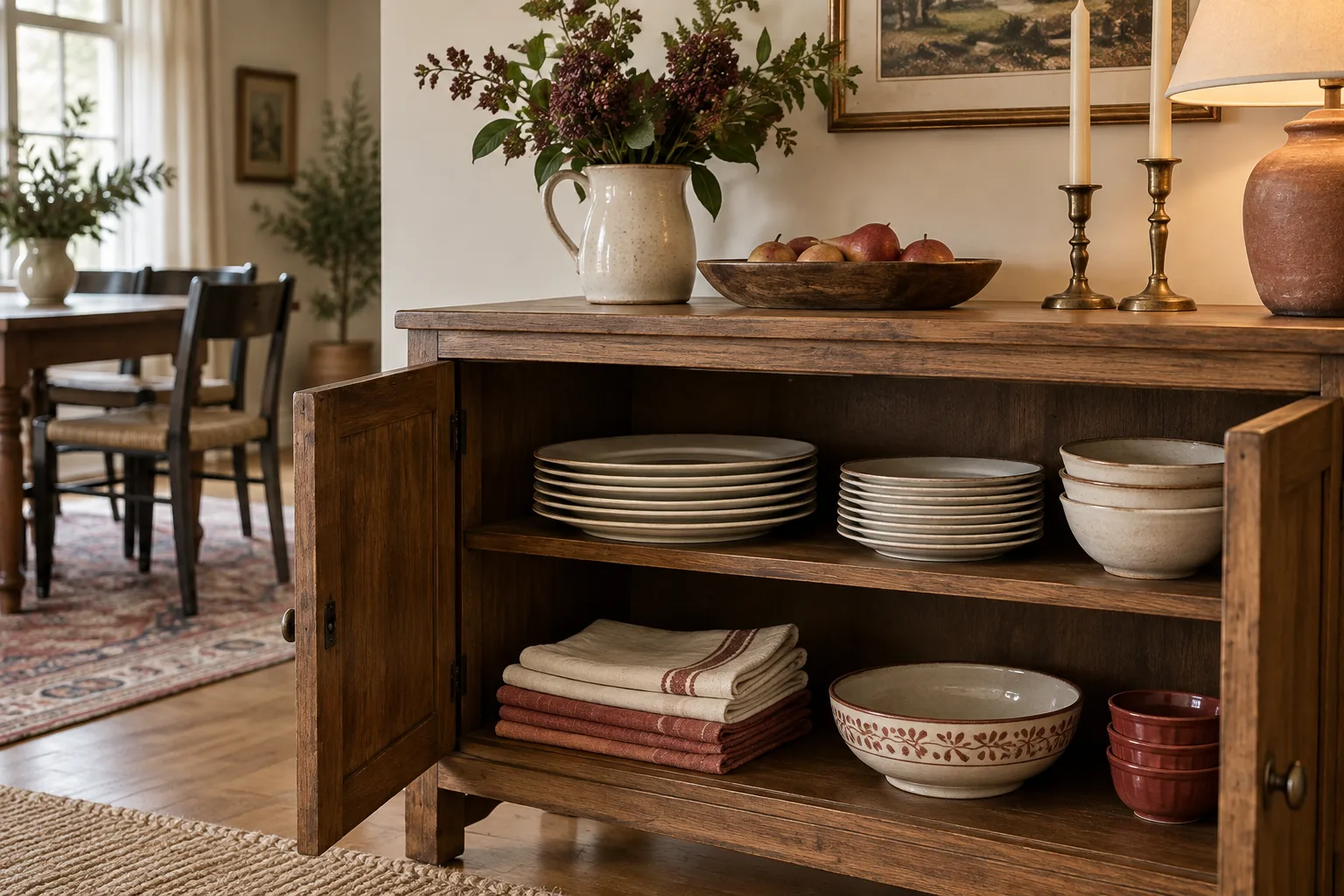
After the door closes
Handle food first: refrigerate perishable leftovers within the appropriate food-safety window and label containers with contents and date. Soak only the pans that need it. Wipe the table, collect linens in one basket and leave a short morning list if everything cannot be finished. Turn off candles and appliances before bed.
Use what you own
A sturdy baking sheet makes a good carry tray. Reused containers are fine when clean and food-safe. If the dishwasher is full, prioritize food storage and a clear sink edge over polishing every glass.
Where this may not fit
Food-safety times depend on the dish and room conditions; follow current official guidance. Heavy trays may be difficult to carry, so use smaller loads or ask for help. A slow reset is acceptable when energy is limited.