This guide has no affiliate links or sponsored selections.
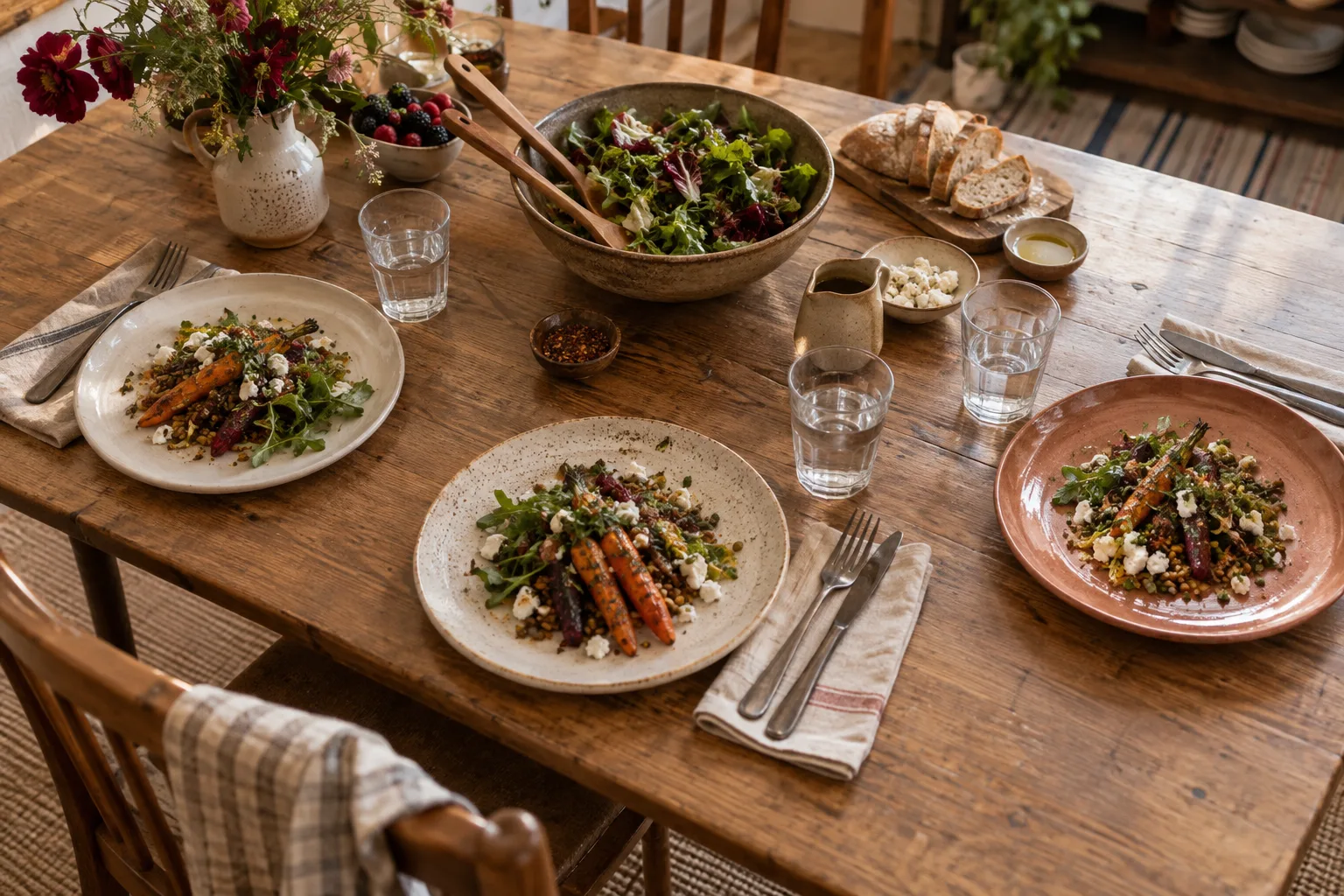
Start with the dishes you already reach for. A table feels coherent when guests can find their place, pass food comfortably and see one repeated detail. Matching plates are optional.
Choose an anchor, not a whole new set
Put the usable plates on the table before adding anything decorative. Check that each is clean, stable and large enough for the meal. If the plates vary, repeat one quieter element: the same water glass, a similar napkin fold, or a shared color in the center. Leave a hand-width between place settings where possible; an attractive arrangement that crowds elbows is not helping anyone.
Arrange for the meal
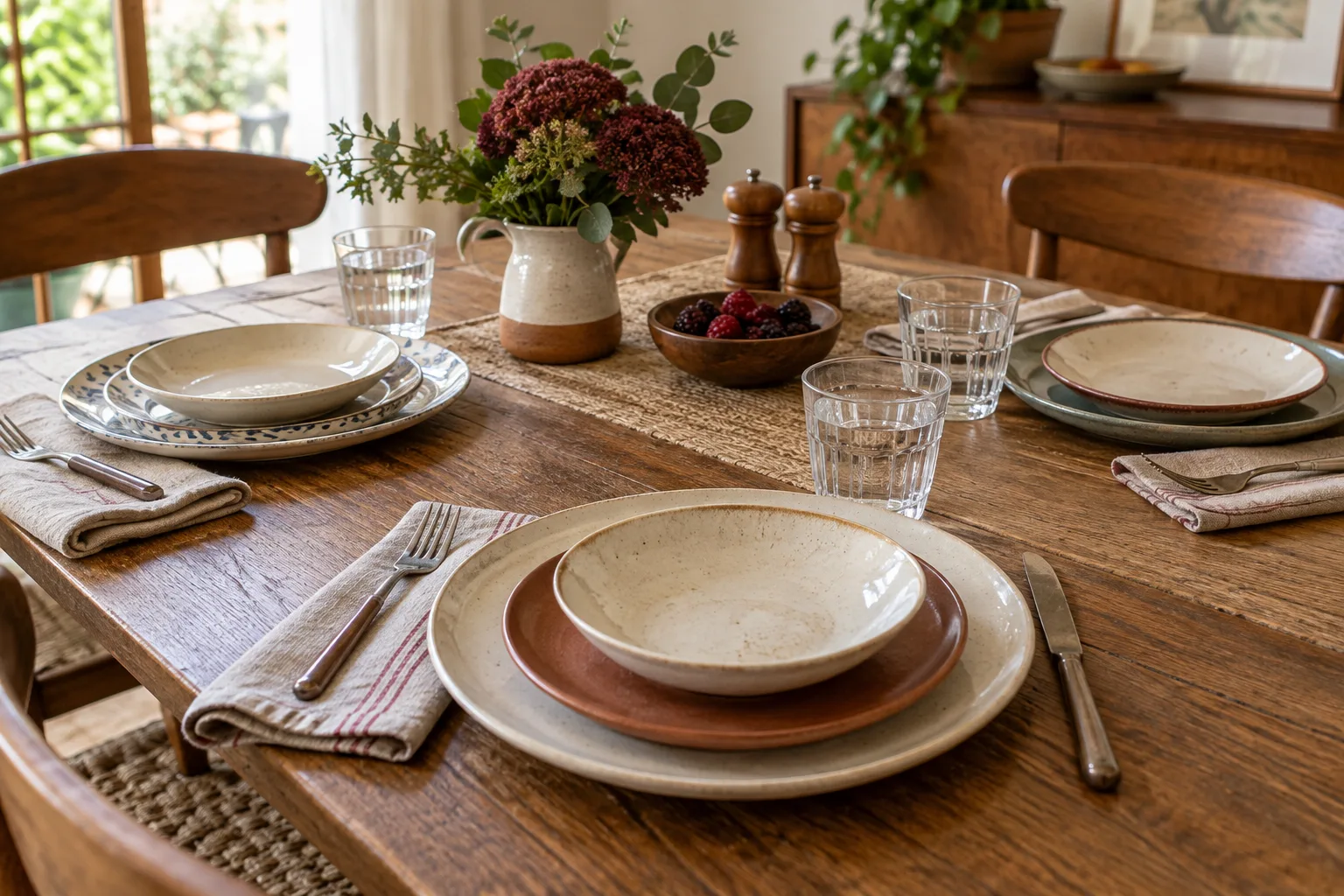
Place the largest pieces where people can reach them without leaning over another guest. If a wide serving dish blocks conversation, move it to a sideboard and let people serve themselves. Keep a clear landing space for a pitcher and hot dishes. Small flowers or citrus can sit low enough that seated guests can see each other.
Try it with what you own
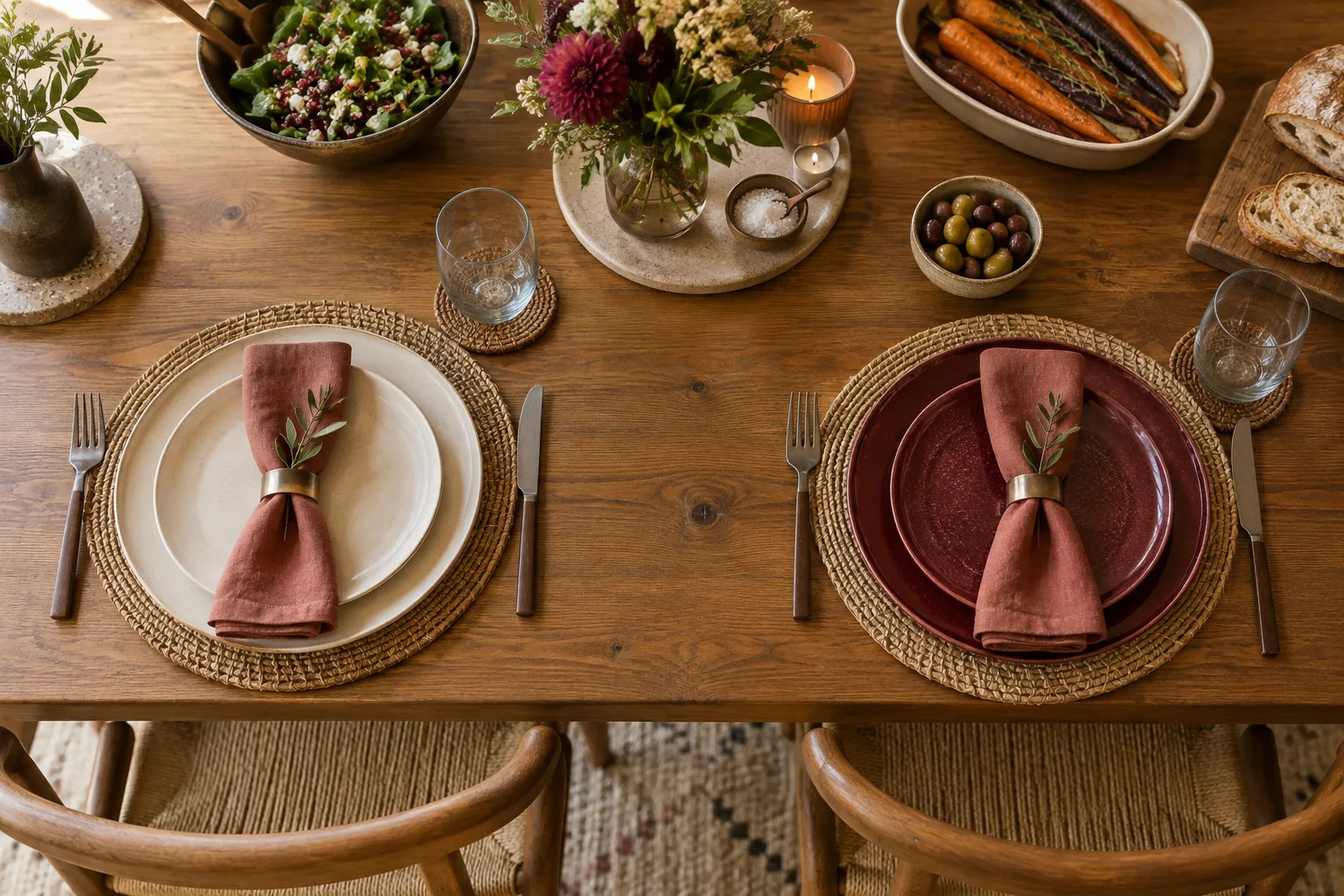
Pair plain dinner plates with different salad plates, or use one plate style for every other seat. A folded cloth in the same tone at each place supplies rhythm without hiding the variation. Borrowing two plates from a neighbor is more sensible than buying a set for one evening; return them promptly and check whether they need hand washing.
Where this may not fit
If plate sizes differ greatly, portion food in the kitchen or use a buffet so nobody gets an awkwardly small serving. Chipped or unstable dishes are not worth using. If guests have accessibility needs, prioritize easy-to-grip tableware over a coordinated look.