This guide has no affiliate links or sponsored selections.
A low, sturdy bowl earns its shelf space when it can move from prep to table without needing a special occasion. These three arrangements use the same kind of vessel in different ways.
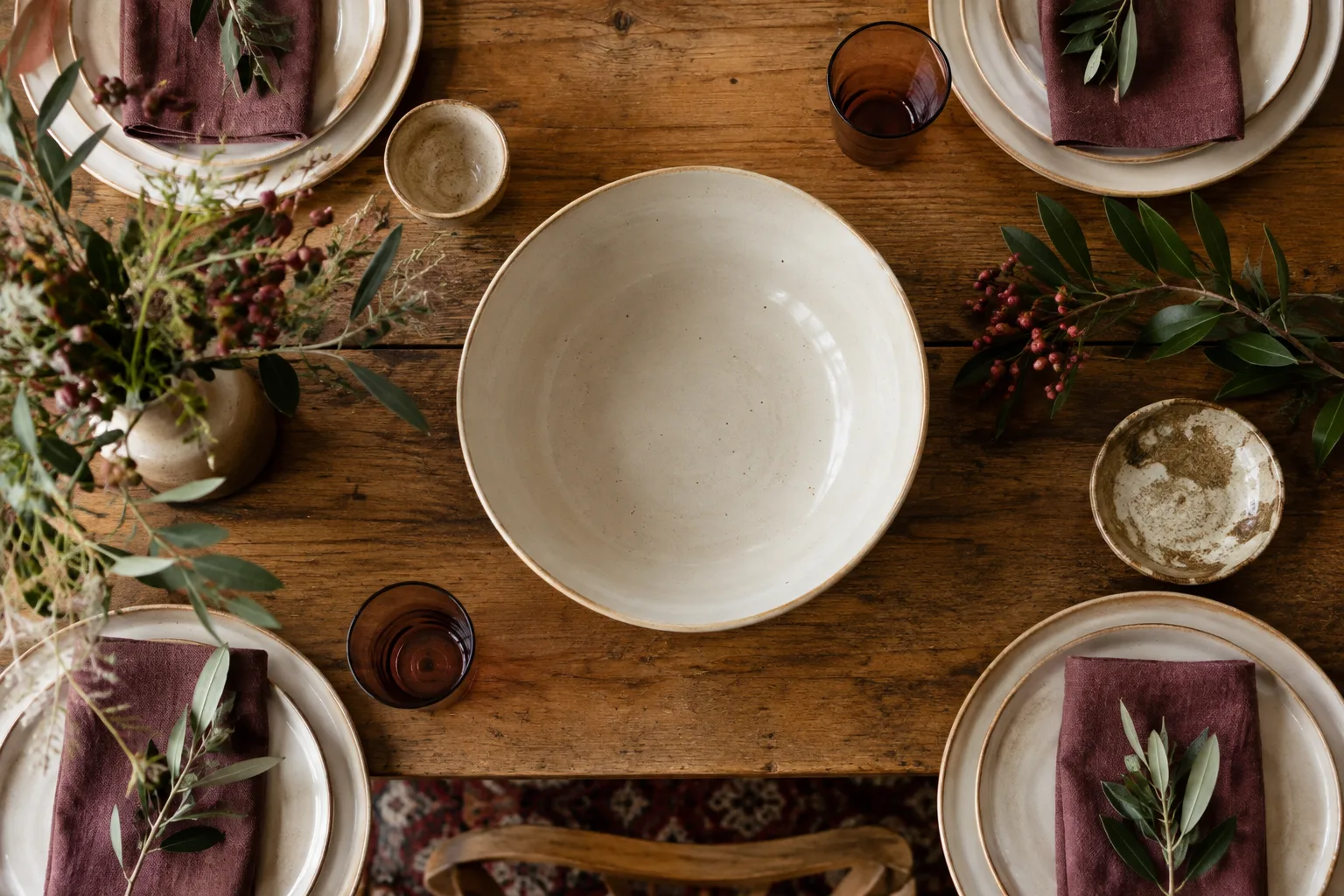
Arrangement one: the meal at the center
Put the bowl on a heat-safe trivet in the middle of a small table and fill it with a room-temperature shared dish, such as a grain salad. Place the serving spoon on a small plate so drips stay off the table. Keep bread and water toward opposite ends to reduce reaching across people.
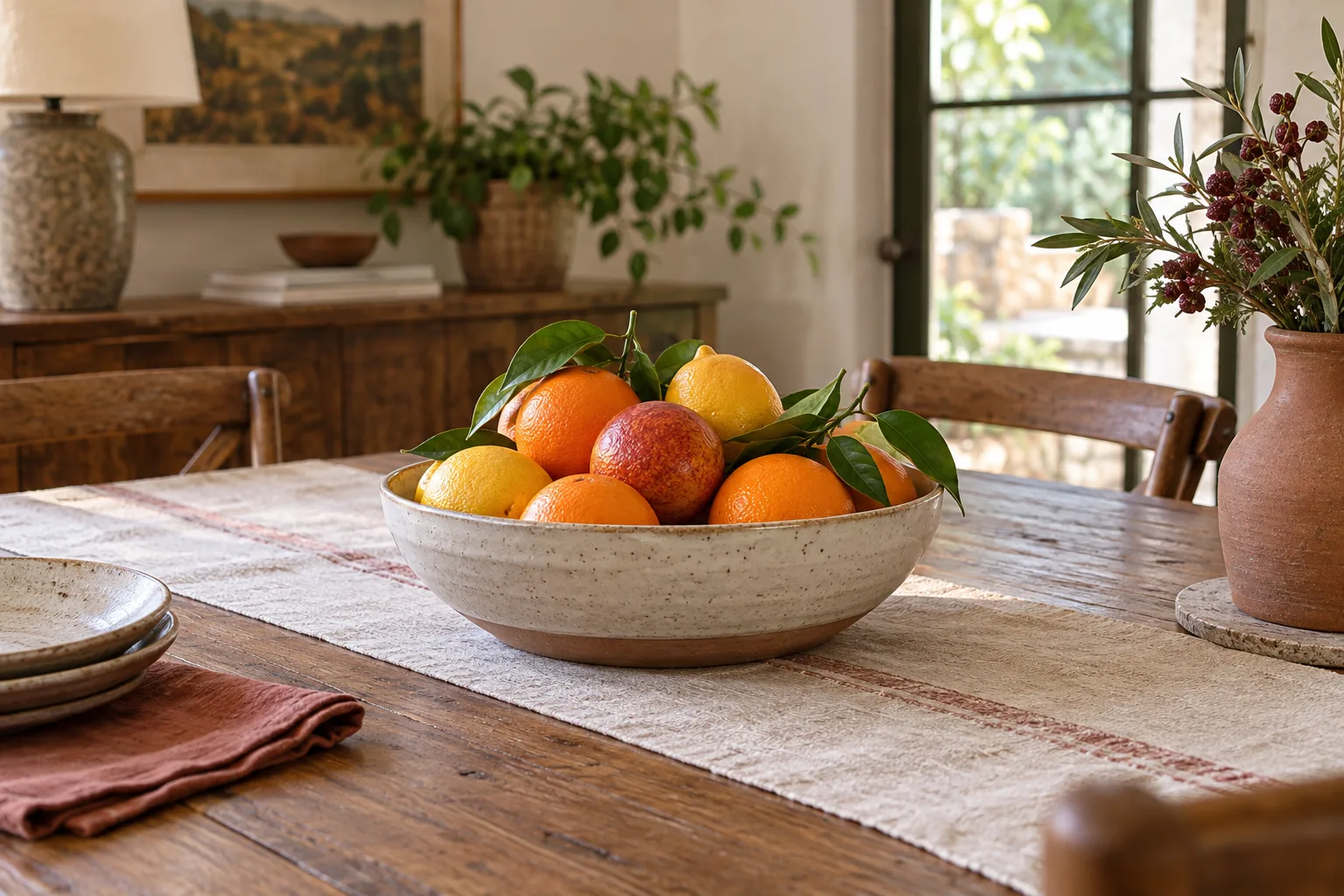
Arrangement two: a low centerpiece
Before food arrives, use the clean dry bowl to hold citrus or a few stems in a separate watertight jar tucked inside it. Keep the arrangement below eye level. Move the bowl to a sideboard when platters arrive; a centerpiece is allowed to be temporary.
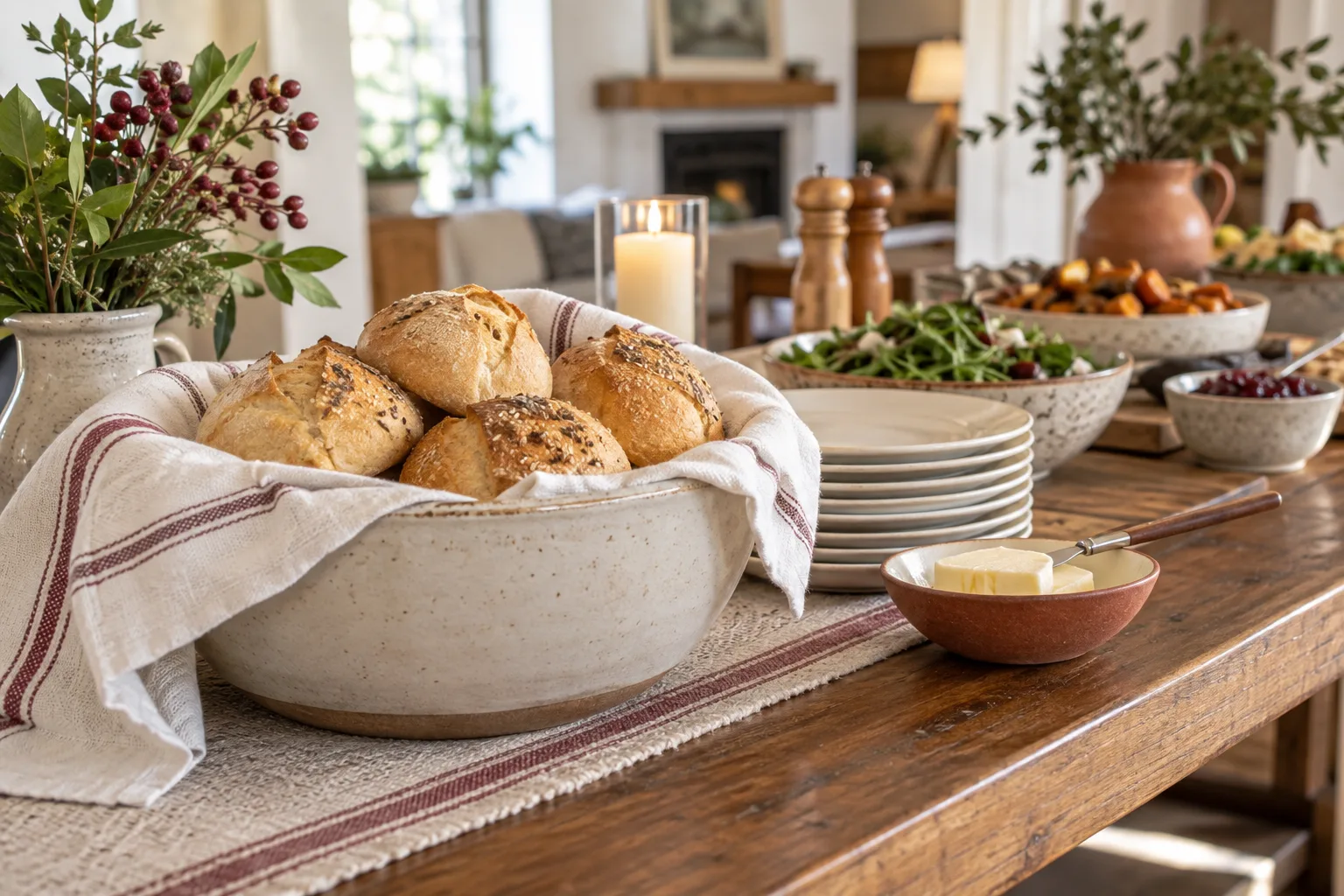
Arrangement three: a self-serve station
Line the empty bowl with a washable napkin and use it for wrapped rolls, folded spare cloths or small individually packed snacks. Set it at the beginning of a buffet, with plates before food and cutlery at the far end so people can carry a plate freely.
Use what you own
A mixing bowl, shallow casserole or large salad bowl can do the job if it is stable and food-safe. Measure available table space before deciding it must sit in the center. The best bowl is one you can lift safely when full.
Where this may not fit
Do not put a hot vessel directly on an unprotected table, and do not use decorative bowls of unknown finish for direct food contact. Narrow tables may work better with the bowl on a nearby counter.