This guide has no affiliate links or sponsored selections.
A reusable napkin is only useful if it fits your laundry habits. Start with what you already wash, how many people usually sit down, and whether a little wrinkling feels fine to you.
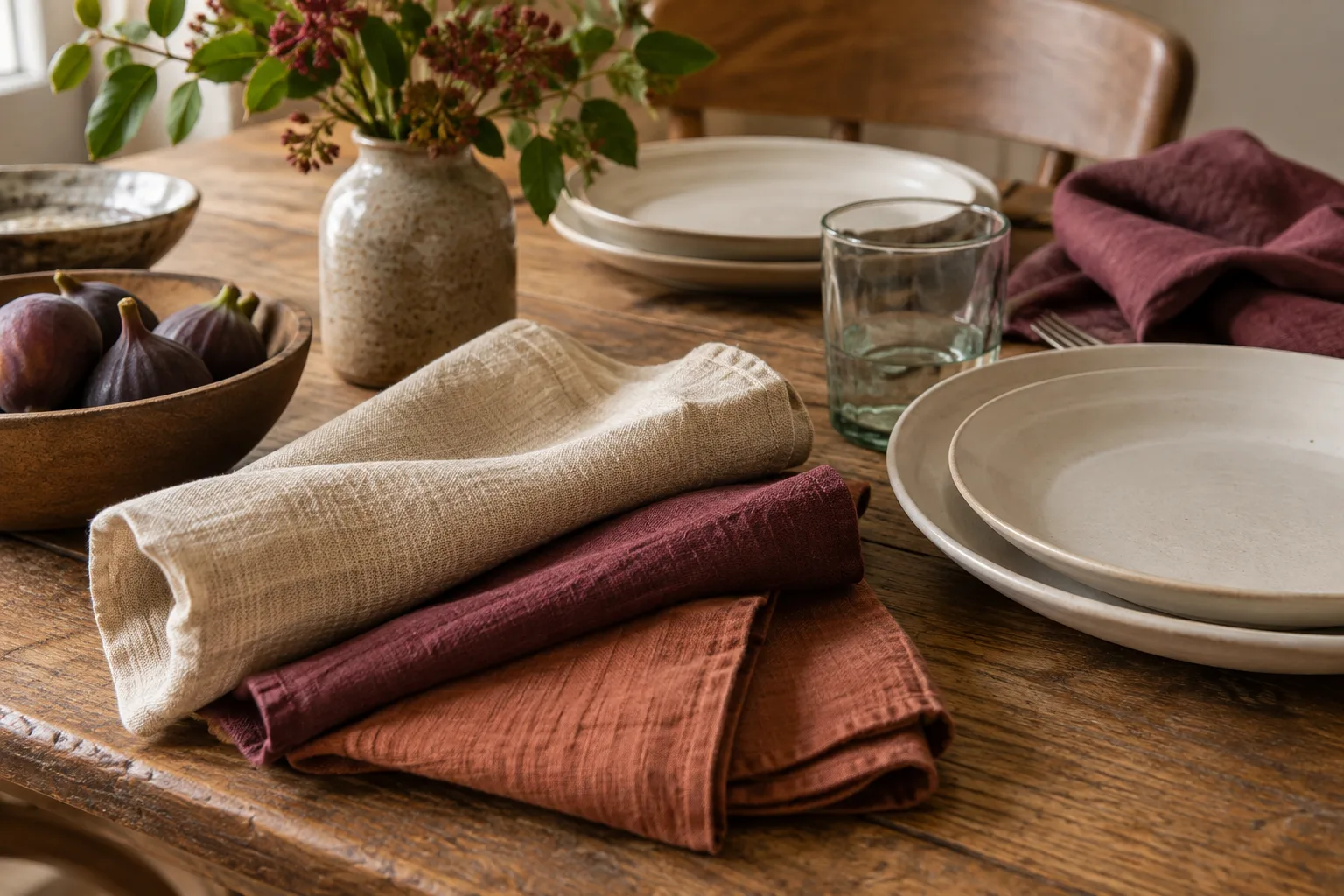
Compare practical traits
Cotton is familiar and often straightforward to launder; linen may feel lighter and relaxed but tends to crease. Blends vary, so read the actual care label rather than assuming. For a dinner napkin, check dimensions with a ruler and fold one of your current cloths as a reference. A beautiful tiny square may be better as a coaster than a supper napkin.
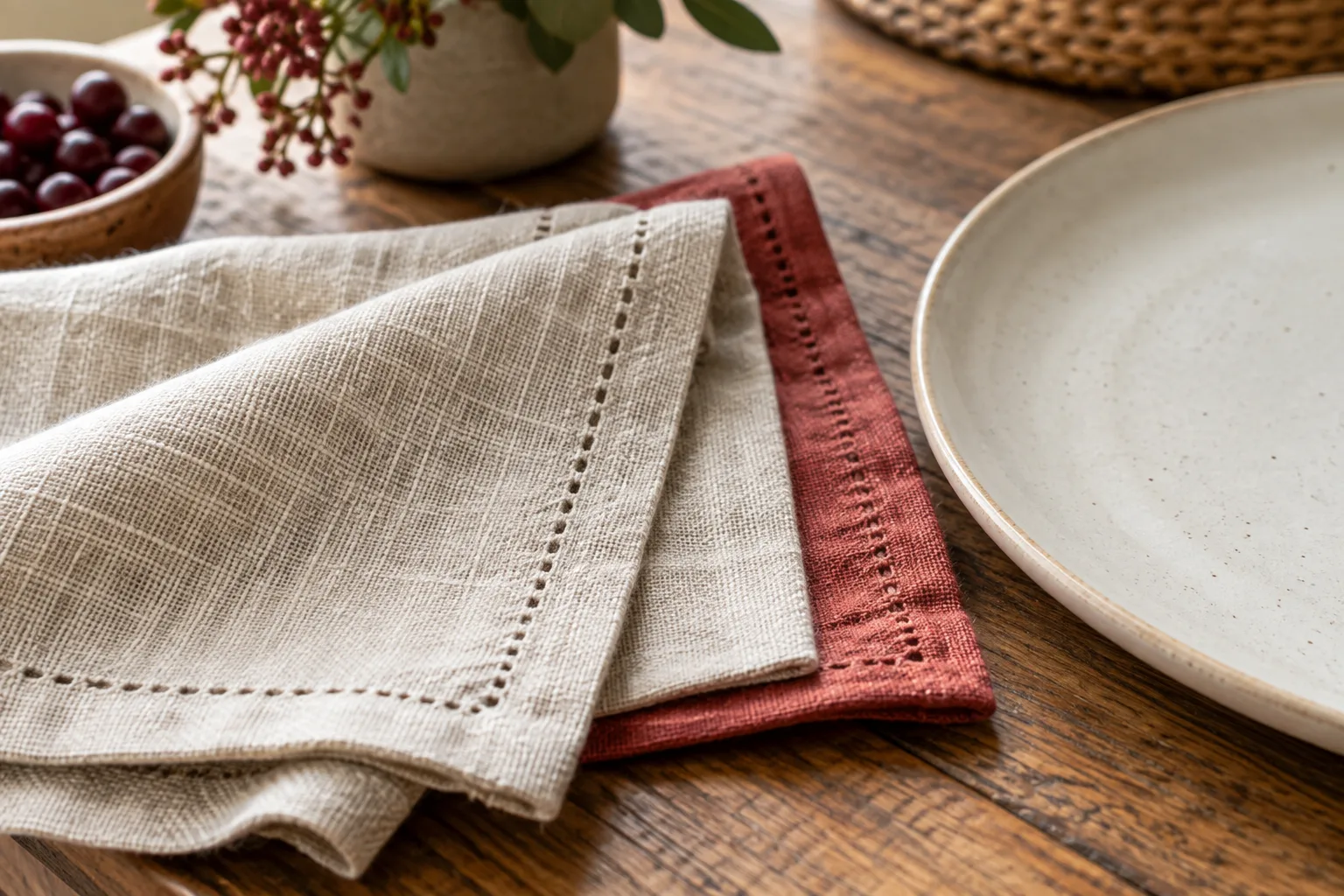
Think about the wash cycle
Choose a color and fabric that can go with loads you already run. Dark berry may hide some marks but can bleed on first washes; light cream shows stains but may be easier to inspect. Check recommended temperature, drying method and whether ironing is required. Buy a spare only if it solves a real turnover problem.
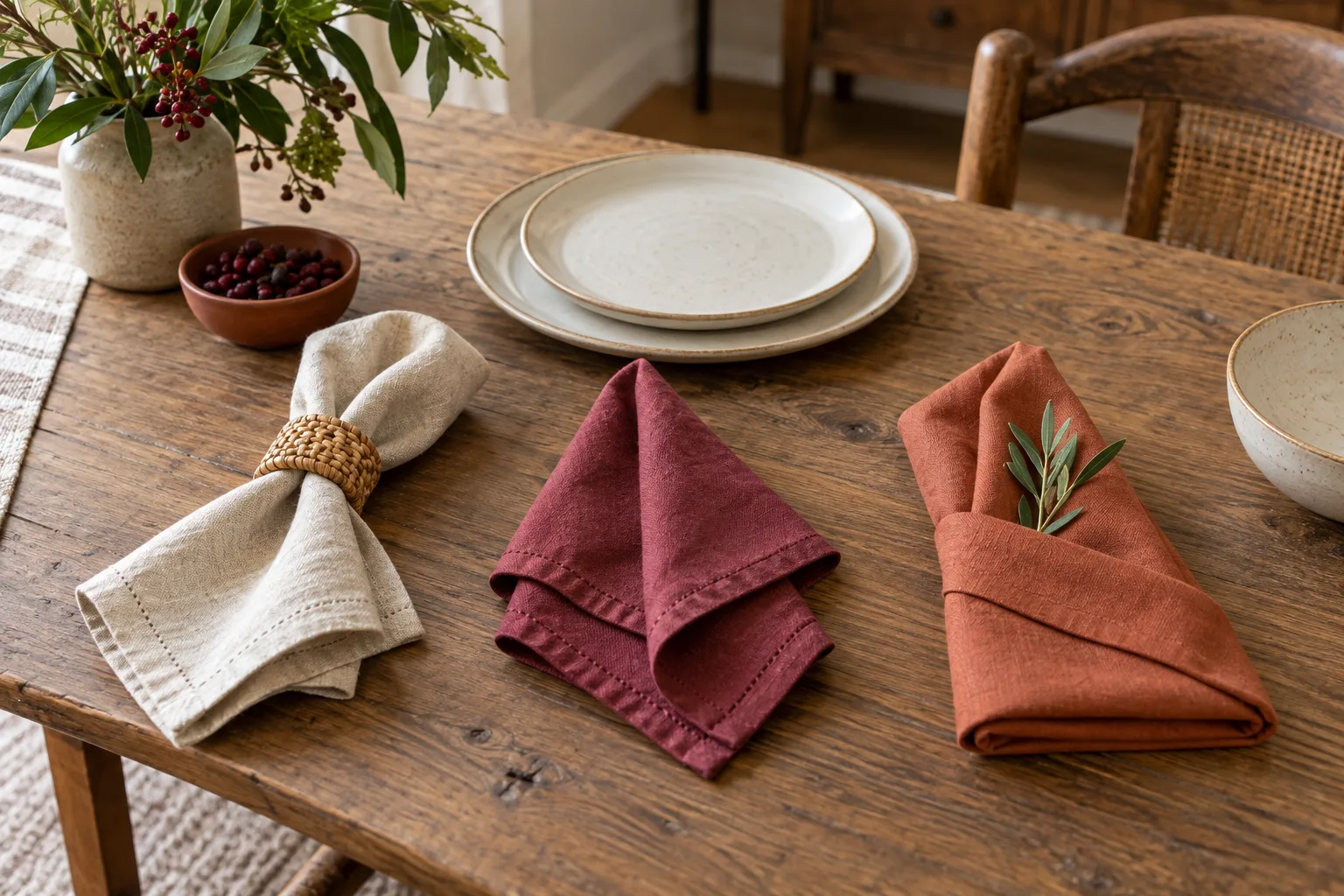
Set them out simply
Fold each napkin into a rectangle beside the plate or tuck it loosely under the fork. The same fold unifies a mixed table. Store clean napkins together in a drawer so setting six places does not become a search through several cupboards.
Use what you own
Clean tea towels or cloth napkins in mixed colors can work for a casual meal. Choose pieces that feel comfortable at the face and have no cleaning-chemical residue. Matching a folded shape costs nothing.
Where this may not fit
No fabric is stain-proof, and care labels differ even within the same fiber. For guests with sensory needs, rough texture or heavy fragrance from detergent may matter more than color. Disposable napkins may be the realistic choice in some settings.