This guide has no affiliate links or sponsored selections.
The point of organizing serving pieces is to make setting the table faster. Before buying dividers, look at which pieces actually leave the cupboard and where they travel during a meal.
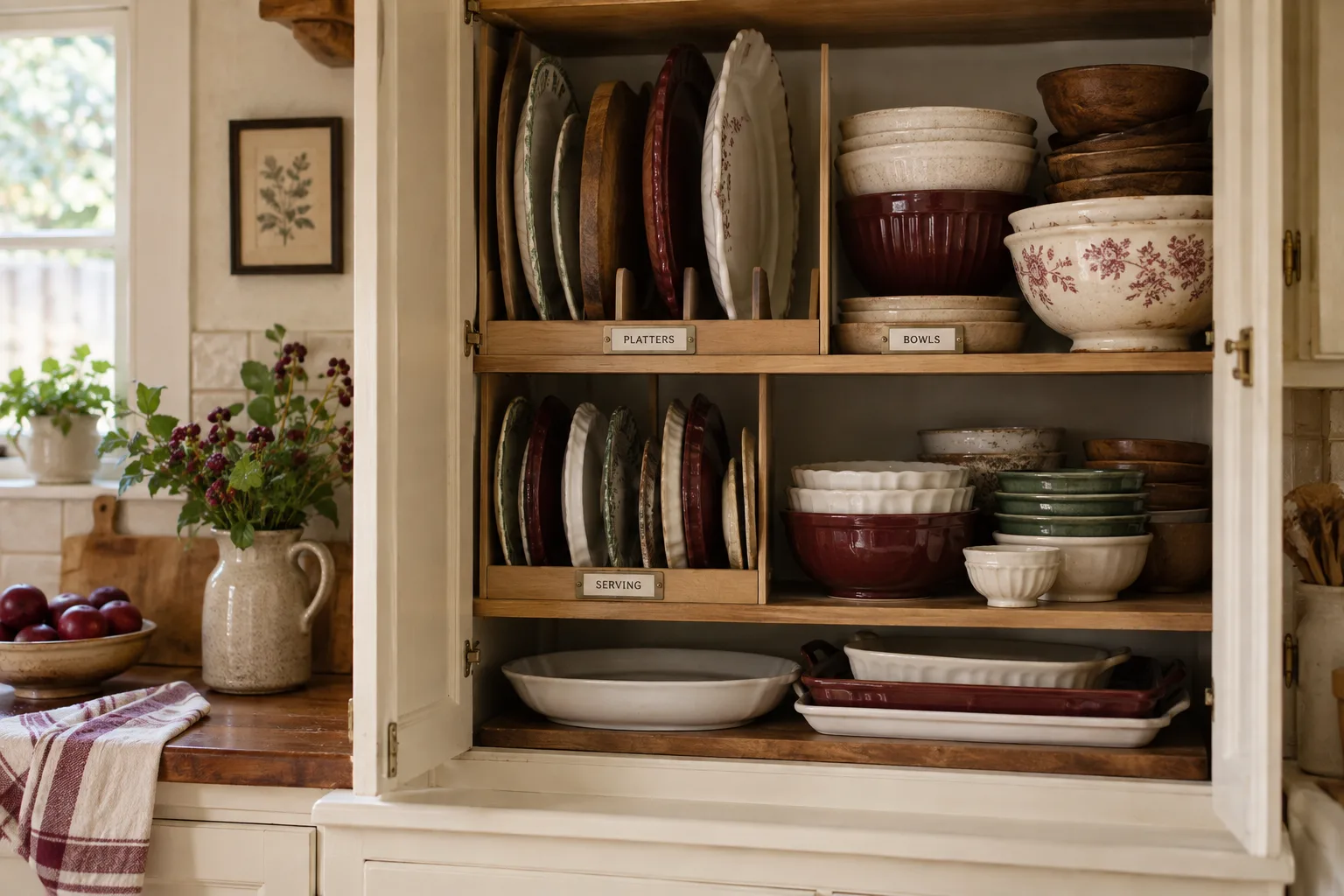
Edit by use and weight
Take everything out of one shelf and group bowls, platters and pitchers by how often you use them. Put heavy pieces below shoulder height and the most-used bowl where it can be lifted without moving three others. Measure shelf depth and door clearance before changing an arrangement.
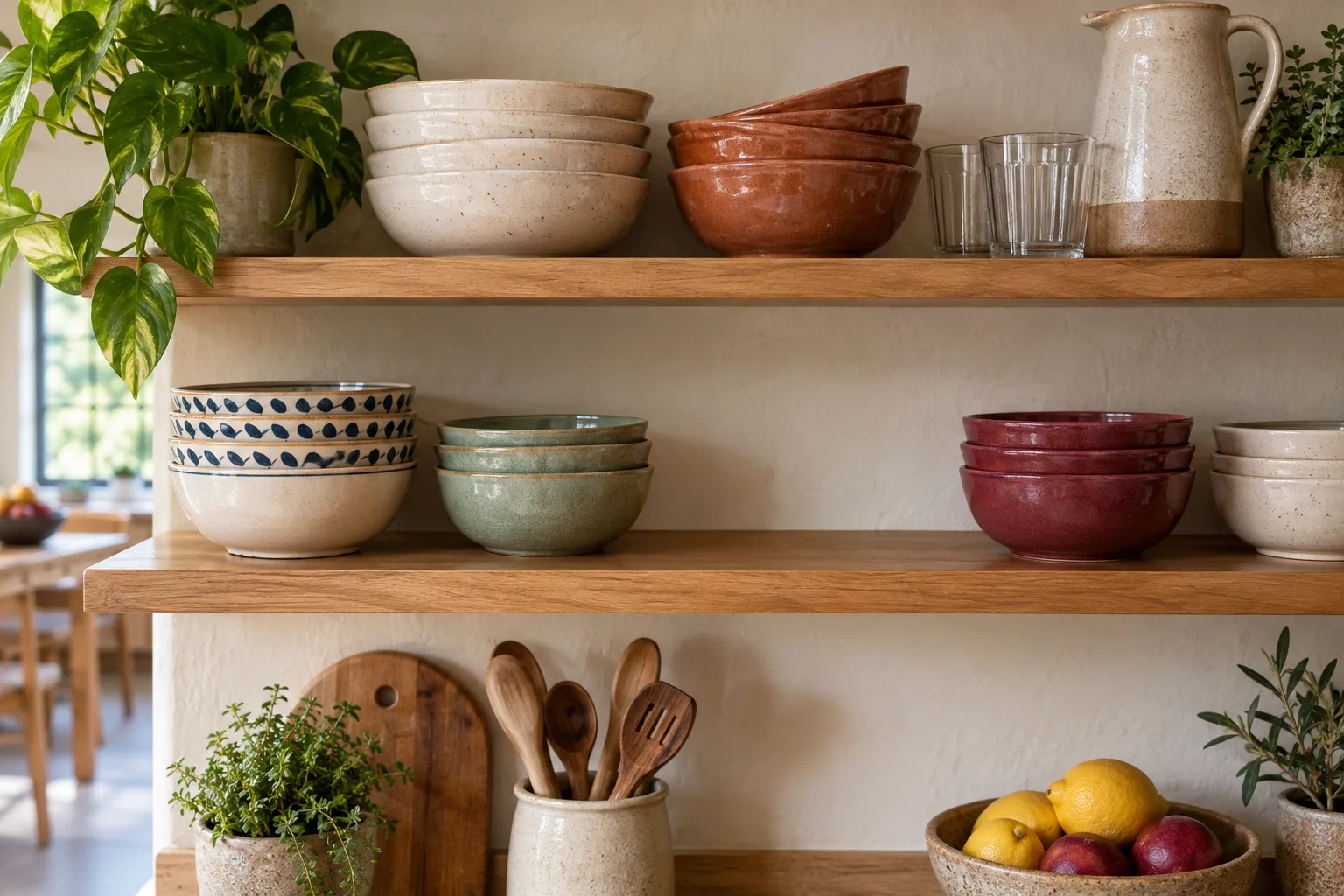
Choose a stable storage method
Nest bowls only when their rims and finishes tolerate it; use a soft cloth between delicate pieces. Stand platters vertically only with a rack that supports them securely. Keep lids near their bases. A small label inside a cabinet may help shared households return pieces to the right place without making the kitchen look like a warehouse.
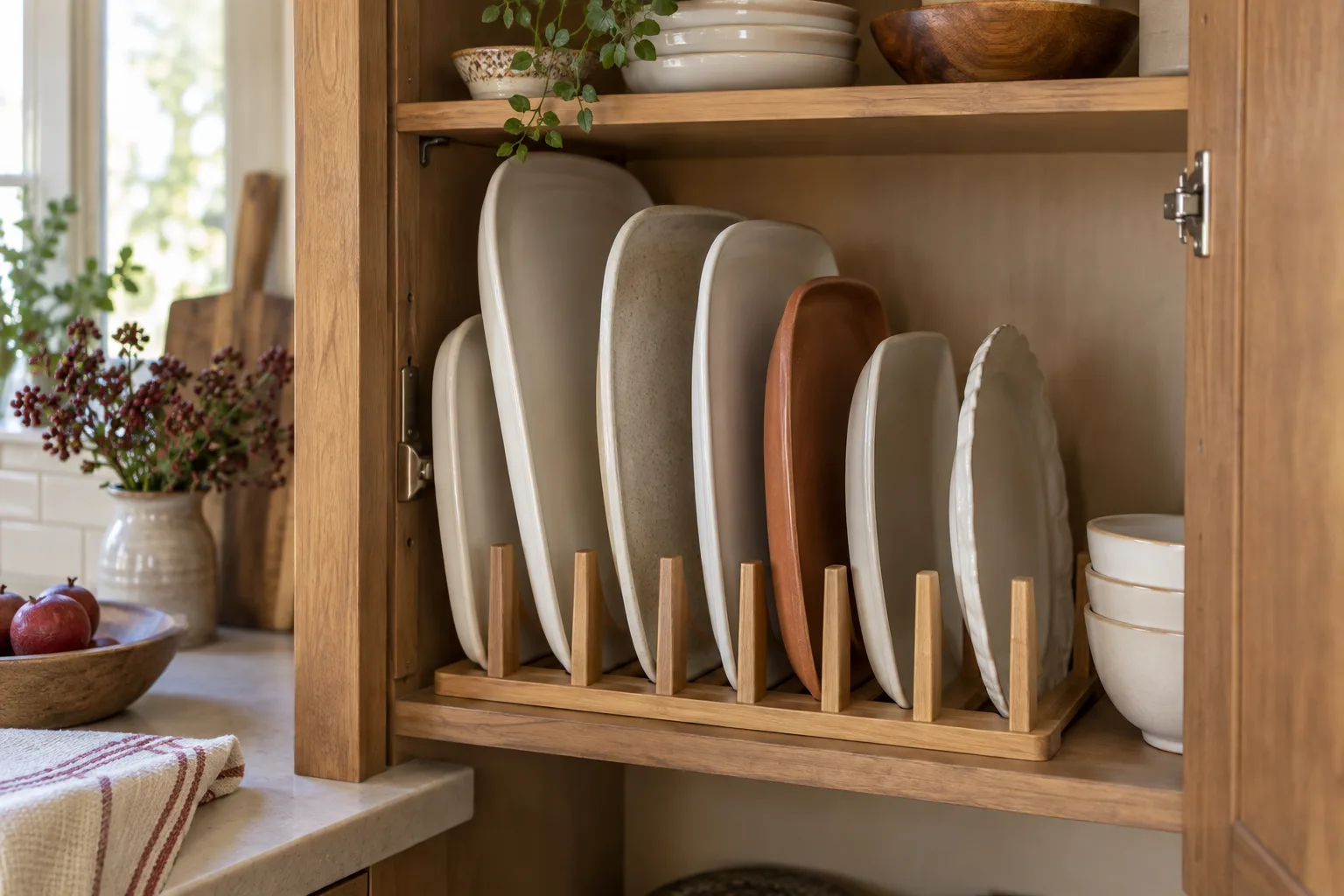
Give the next gathering a test run
Set the table once using the new arrangement. If the pitcher is blocked behind holiday dishes, the layout has failed its purpose. Leave a little empty space so a clean item can be put away easily after washing.
Use what you own
A folded tea towel can separate stackable pieces. Moving rarely used seasonal dishes to a higher shelf may free the best spot for everyday serveware. Reorganization should not require a shopping trip.
Where this may not fit
Do not stack fragile ceramics beyond what feels stable, and follow any maker guidance for delicate finishes. Renters or shared households may need reversible storage changes. If bending or reaching is difficult, prioritize accessibility over visual tidiness.