This guide has no affiliate links or sponsored selections.
Atmosphere often comes from what the room lets people see and do. A clear table, warm light and comfortable faces matter more than a collection of seasonal pieces.
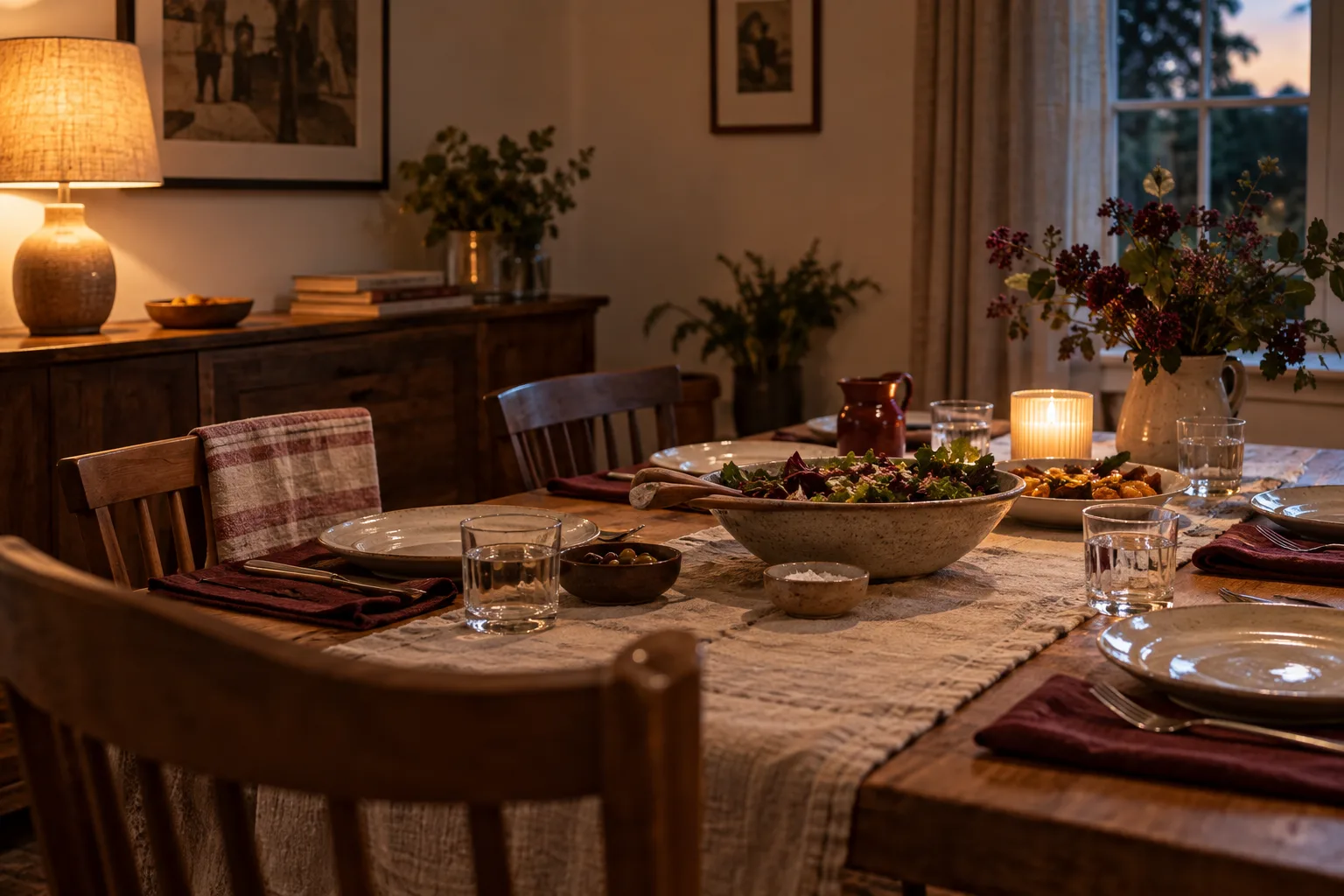
Start with the room's existing light
Turn on the lamps you have, then sit at a guest's eye level. If a bulb is glaring, move the lamp farther from the table or aim its shade at a wall. Keep enough light to read a plate and move safely. A dim room is not automatically welcoming.
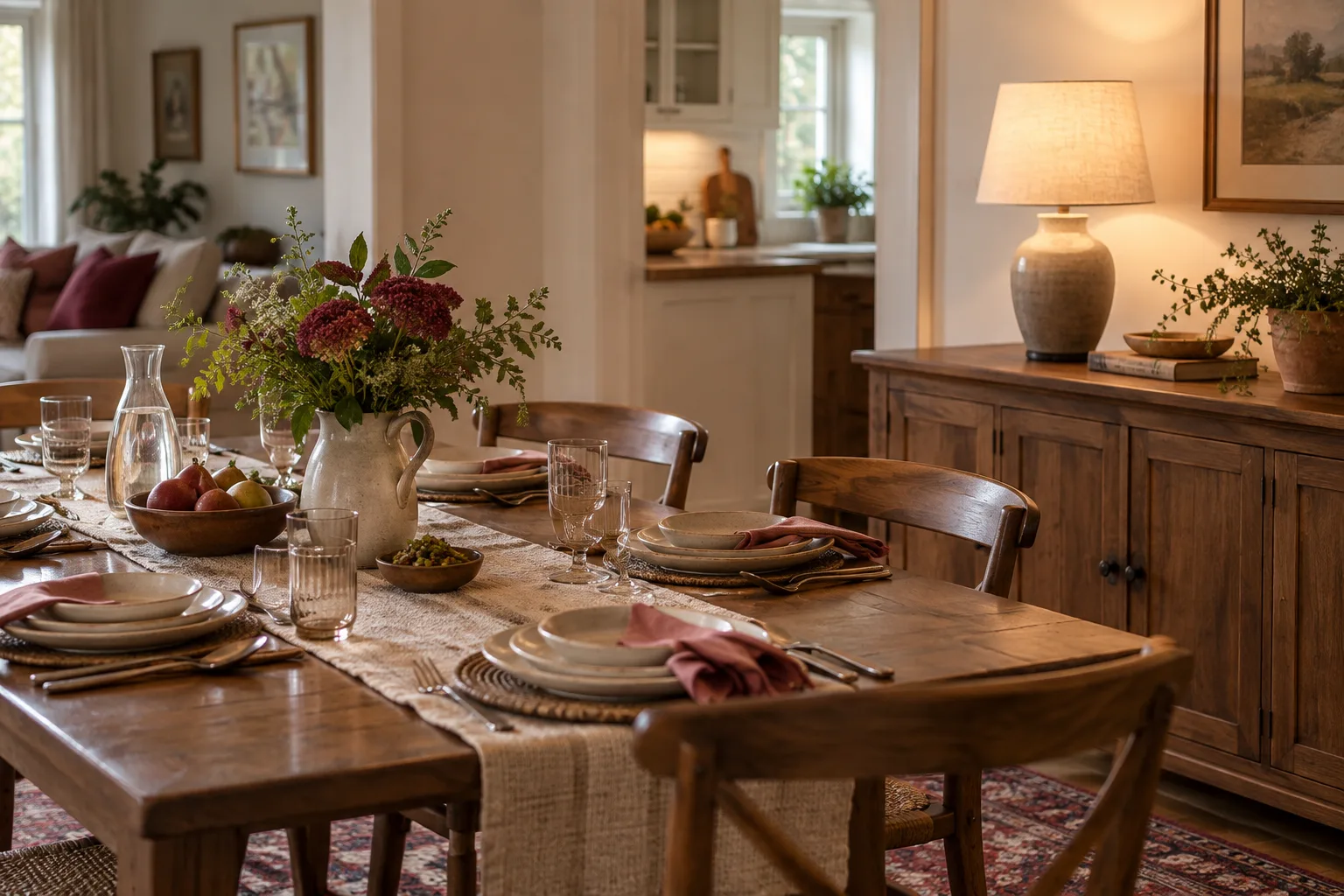
Make a low center
Use a bowl of fruit, a few stems in a stable jar or nothing at all. Keep the middle of the table low so people can talk across it. Remove anything that competes with serving dishes. A cloth runner can visually gather mixed dishes, but it should not hang where a chair or foot can pull it.
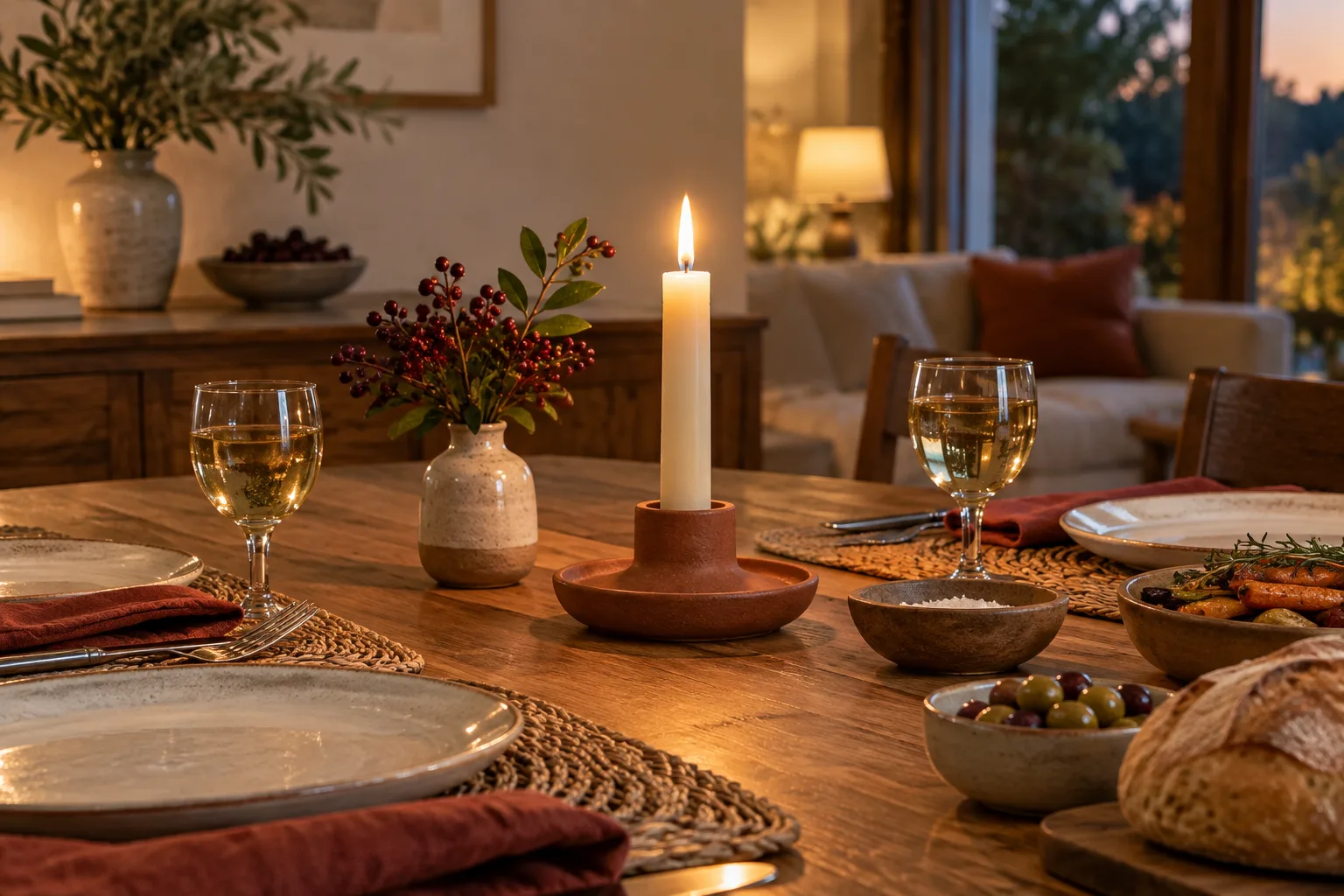
Check the practical details
Look for cords in walkways and combustible fabric near candles. If you use a flame, choose a stable holder, leave it clear of napkins and never leave it unattended. Battery lights may be easier around children or in a crowded room.
Use what you own
Move a side lamp from another room, fold a clean cotton cloth as a runner, and group ordinary glasses near the water pitcher. There is no need to buy a new color scheme for each season.
Where this may not fit
Some guests need brighter light to navigate or read. Ask rather than assuming a low-light mood works for everyone. Open flames may be unsuitable in small spaces or around children and pets.