This guide has no affiliate links or sponsored selections.
A weeknight meal for company is simpler when one component does most of the work. Think of a tray of roasted vegetables or a similar main element, then add a ready grain, bread or salad.
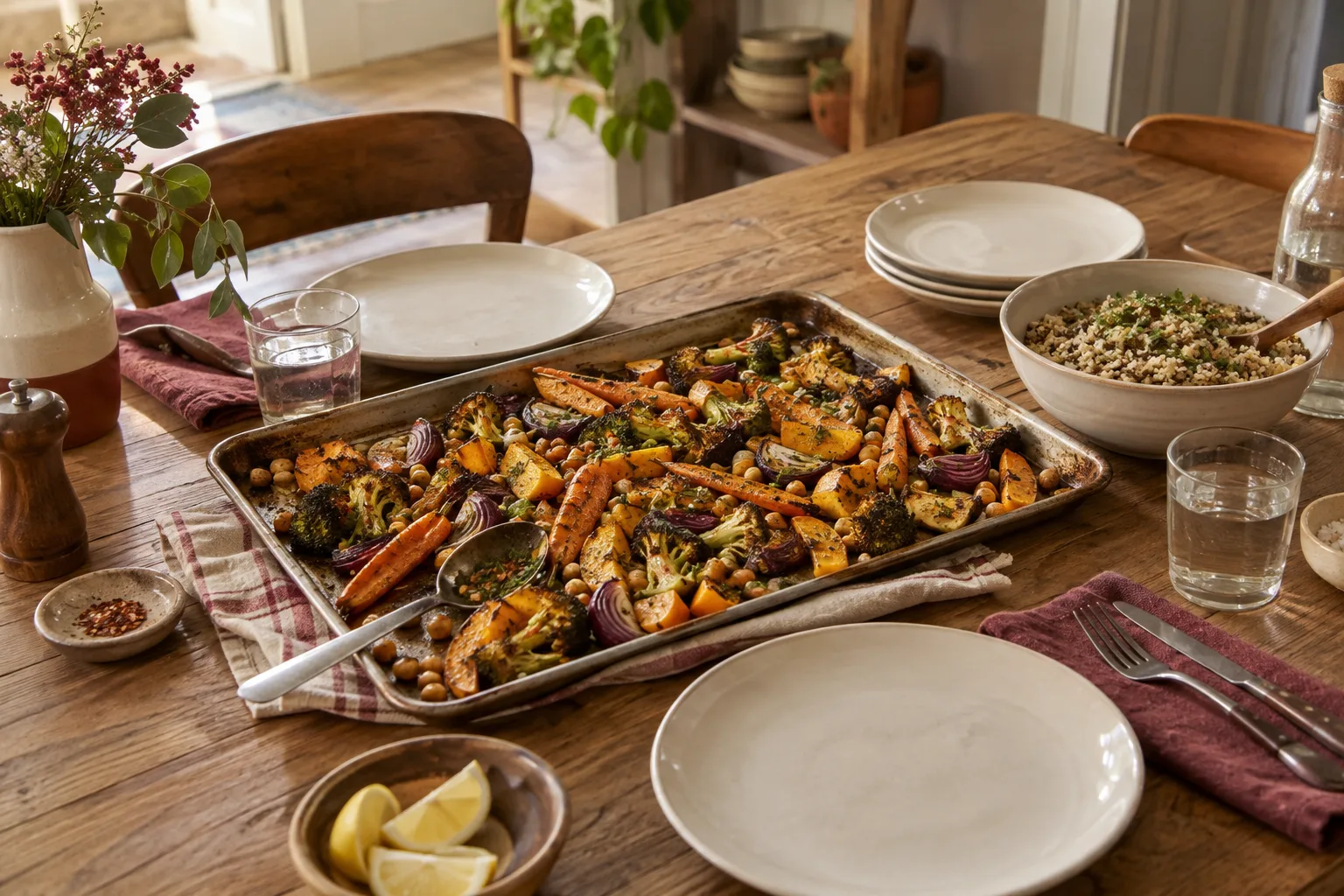
Choose the tray's job
Decide whether the tray is the main dish or a generous side. Cut ingredients to a similar size so they cook evenly, and avoid packing them so tightly that they steam. Use a tested recipe for temperature and timing, especially when cooking meat or fish. For a plant-based meal, pair vegetables with beans, lentils or another satisfying protein.
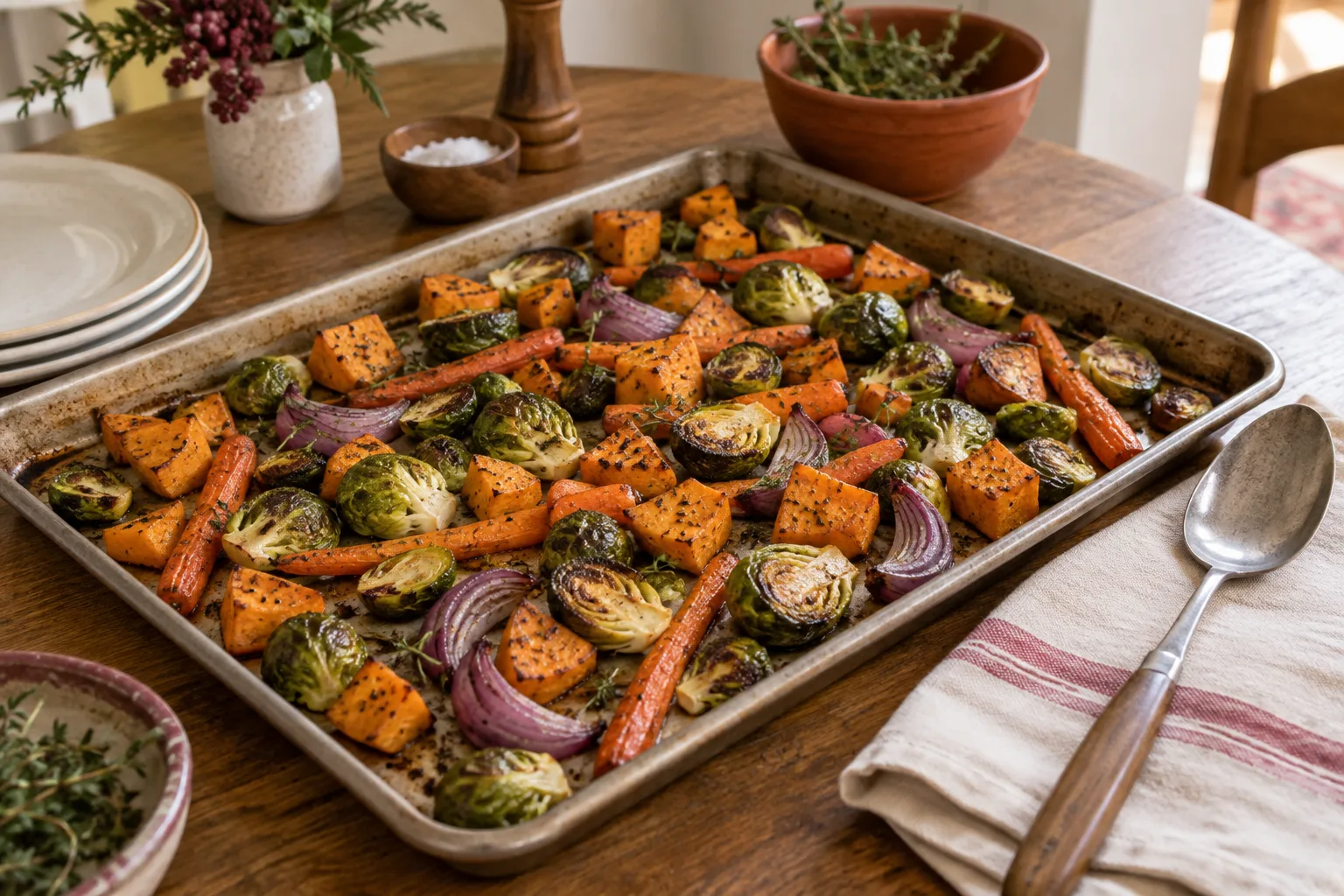
Add one cold or make-ahead companion
A dressed grain salad, yogurt sauce or washed greens can be ready before guests arrive. Put it in a bowl that can go straight to the table. Check dietary restrictions and keep allergen-containing toppings separate when useful. The menu should have a complete plate without requiring guests to decode five little bowls.
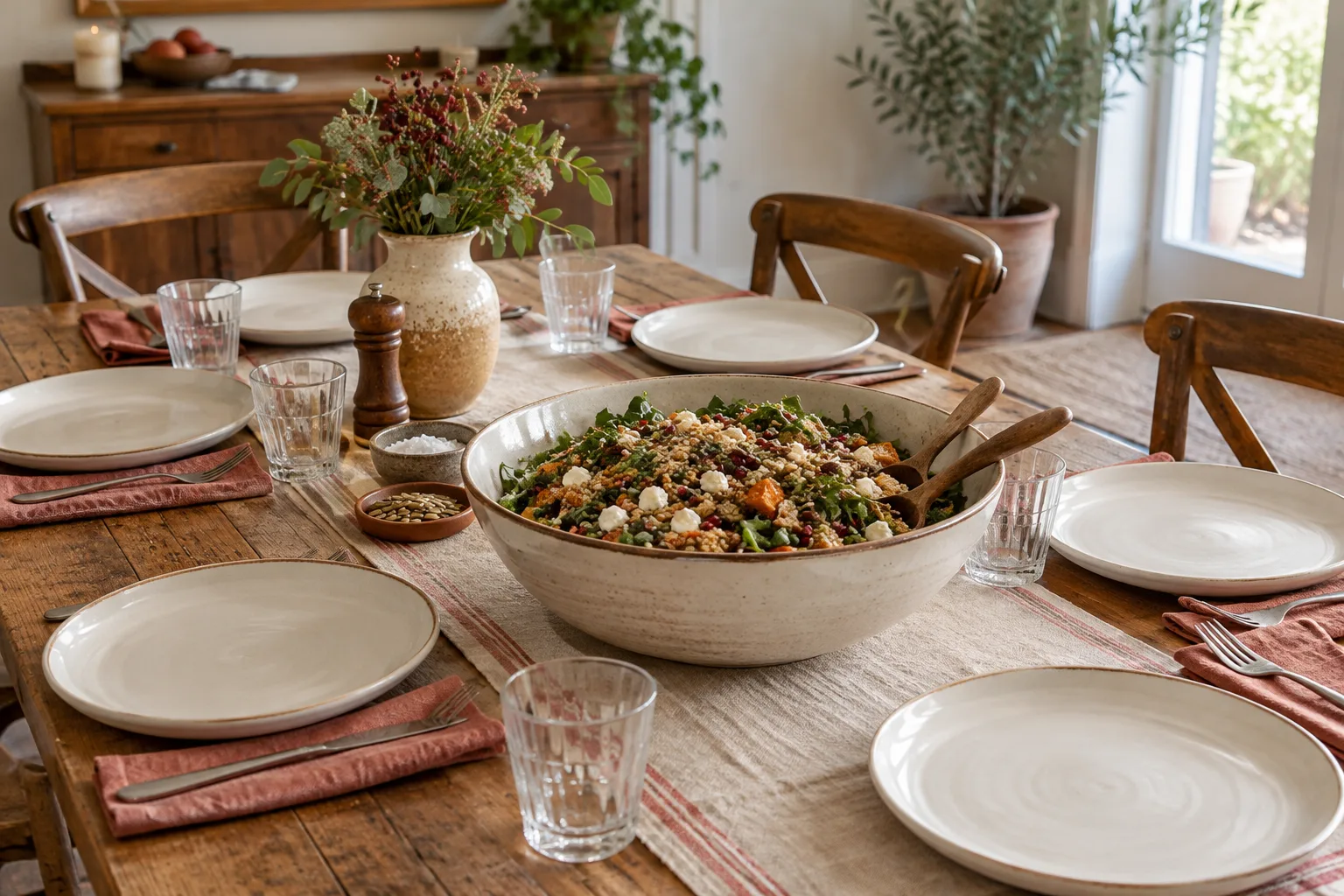
Serve without last-minute choreography
Rest hot food as the recipe directs, then carry the tray to a safe counter or portion it in the kitchen. Set out water and a serving utensil before the oven timer goes off. A simple fruit dessert or store-bought treat is enough if you want a second course.
Use what you own
A rimmed baking sheet and a mixing bowl cover this plan. If the oven is occupied, use a stovetop pot for the main element and keep the same menu structure.
Where this may not fit
This is a menu framework, not a complete recipe. Cooking temperatures and food-safety requirements vary by ingredient. Small ovens may require batches, which reduces the time savings.